The Restaurant Growth Loop: How Oddle Check-Ins, Customer Intelligence & Marketing Turn One Visit Into Five
A repeat guest costs about a fifth of a new one and spends two-thirds more, yet most restaurants can't name the diners who already love them. This is the growth loop that fixes it: capture every guest, understand who they are, and bring them back automatically, one visit feeding the next.
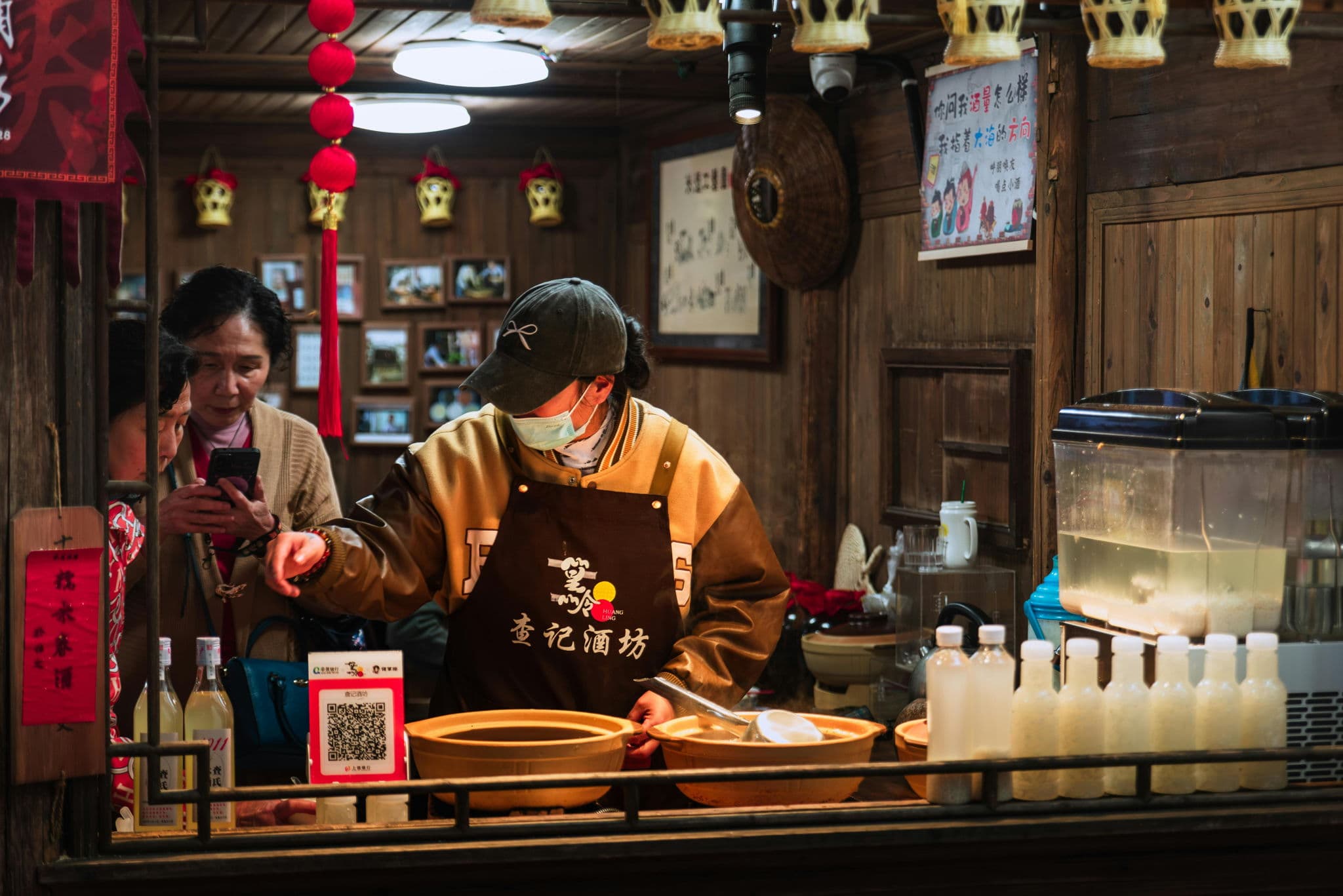
Picture a restaurant doing 4,000 covers a month. Solid dinner crowd, busy weekends, a few private events. Now picture the same place a year later, and ask one question: of the roughly 48,000 guests who came through the door, how many can the owner name? How many can they reach on a quiet Tuesday and actually bring back?
For most restaurants, the honest count is a few hundred. The rest walked out anonymous.
That gap is the whole problem with restaurant customer retention. Not "you should run loyalty better" or "you need a CRM." The deeper issue is that the three or four things most restaurants use to bring guests back, a stamp card, a CRM somewhere, a Mailchimp list, a booking log, don't talk to each other. Each one captures a slice of the same diner. None of them can answer the question the business actually needs answering: who are my best guests, and what do they do?
The fix isn't another tool. It's a loop. A system that captures every guest who walks in, understands who they are, and reaches them at the moments that change behaviour, with each turn feeding the next. Done right, this customer flywheel is the single highest-return system an independent restaurant can build, because the maths runs hard in the other direction. Bringing back an existing guest costs roughly a fifth of acquiring a new one, and that guest spends about two-thirds more per visit than a first-timer (industry data, your mileage will vary). This guide walks through the three moves that make the loop spin. The connections between them matter more than the moves themselves, because that's exactly where most restaurants leak.
Why a loop beats a funnel
The funnel is the metaphor most marketing grew up with. Awareness at the top, conversion at the bottom, customer pops out, funnel resets. It fits a software sign-up. It does not fit a restaurant.
A diner doesn't convert once. They re-decide every single meal. Tuesday lunch, Saturday dinner, Mother's Day, the work team that needs a private room next month. Every visit is a fresh choice, and the restaurant they pick is the one their memory surfaces first. That memory gets built between visits, not at the moment of the booking.
A loop fits this better. Capture every guest who comes in. Understand who they are. Bring them back at the right moment. Then the part most people miss: returning guests bring new guests, through reviews and word-of-mouth, and every visit they make hands you more data to work with. The wheel tightens with each turn.
The connections are what make it a loop rather than three separate programmes. Every visit feeds the next message. Every message that lands brings the next visit closer. Speed compounds. A restaurant two years into a working loop isn't twice as good at marketing as one two months in. It's an order of magnitude more efficient, because the same data keeps turning into the same guest returning, again and again.
So this isn't really a marketing idea. It's a margin lever. Hold that thought, because every move below earns its place on the economics, not the theory.
Step one: capture every guest, not just the one who signs up
Start with the norm worth being honest about. Most loyalty programmes capture one diner per table, the bill-payer or whoever bothers to sign up at the counter. The rest of the party walks out anonymous. A six-top becomes a single customer record. Five guests, identity unknown.
This is where the loop starts leaking before it ever spins. You can build the smartest CRM and the sharpest automations in the world, but if 80% of your diners never make it into the database, you're optimising for the small fraction you happened to catch at the till.
The fix is to change the capture mechanism itself. Oddle Check-Ins is built around a whole-table check-in instead of a counter sign-up. A guest taps their phone on an NFC point or scans a QR on arrival, takes about ten seconds, and the whole party gets checked in before the meal rather than after the bill. From our own data, restaurants running Check-Ins capture up to four times more guests per cover than a traditional sign-up card. That multiplier is the difference between a loop with a real database to work with and one running on fumes.
The check-in does double duty. Alongside the contact details, it asks a couple of short questions most systems never bother with: do you live nearby, how did you discover us, what brings you back. That's targeting data, not just a name on a list. It means you can later flash an offer to guests who live within a kilometre, or thank the ones who found you through a friend.
Worth being straight about the catch: this only works if the team buys in. The ten-second scan has to happen consistently, which means baking it into the greeting or the menu hand-off, not bolting on an awkward ask. The restaurants that get this right make it part of service, not an afterthought.
Check-in is the big capture leak for walk-ins, but it isn't the only moment. A booking through Oddle Reserve already carries a name and a number, and every reservation becomes a guest profile instead of a calendar entry. An order through Oddle Shop keeps the guest yours rather than handing them to a delivery platform that bills you 25–35% and a thank-you note. And Oddle Terminal is the only payment terminal that recognises a repeat guest at the moment they pay, turning the till into a capture point instead of just a card reader. Four moments, one record. Most restaurants use one. The loop uses all four. If you want the deeper walkthrough of capturing guests and building a database you can act on, the guide to acquisition and retention covers it.
Step two: turn rows into guests you actually know
Capture gets you names. The next leak is that those names sit in different places that never meet.
Most restaurants have guest data scattered across five disconnected systems. The POS knows transactions. The booking tool knows bookings. The loyalty app knows stamp counts. The email platform knows who's on the list. Each one holds a slice of the diner. None of them holds the person. And the cost of that fragmentation isn't abstract: you can't see who's gone quiet, so you can't bring anyone back. The revenue just leaks out the side, invisibly.
Customer Intelligence is the layer that pulls every captured signal into one profile per guest. The headline view is a Lifecycle Map that plots every guest by how recently and how often they've visited, sorting them into stages you can act on: Best Customers, Promising, New, At Risk, Lapsed, Window Shoppers. No setup, no spreadsheet gymnastics. You open it and the segments are already there.
Underneath that, Power Filters let you slice the database any way the question demands. Guests who live within a kilometre. Guests whose lifetime value is in the top fifth. Guests who've ordered online but never booked a table. Guests who redeemed an offer once and vanished. Save any slice as a segment and it stays live, refreshing as guests move in and out of it.
A concrete picture makes this real. Take a 150-cover dinner restaurant in Singapore, average cheque S$45, two years in. Without unified data, the owner knows the monthly revenue line and not much else. With it, they can see that the top 20% of named guests visit roughly four times as often as the average and spend about 30% more per visit. Thirty guests doing the same monthly volume as 120 of the middle crowd. Those 30 are who you build the next year of marketing around. The middle 120 are who you try to move up. You cannot see any of that in a POS report.
This is also the plain-language foundation worth getting right before you spend on tools, and what a restaurant CRM actually is is the place to start. The point of all this slicing isn't a prettier dashboard. It's the input to the next move, because segments only matter if something acts on them.
Step three: bring them back on dining behaviour, not the calendar
The norm here, again worth naming. Most email tools fire on time-based schedules. Welcome two days after sign-up, newsletter every Tuesday, festive promo a week out. That's how platforms built for everything else work, because those lists aren't doing anything in particular between sends.
Restaurants are different. A guest who hasn't visited in 60 days needs a different message from one who came in last weekend, and the trigger should be the dining behaviour itself, not the date on the calendar.
This is where marketing automation earns its name. Oddle's Marketing comes in two halves. The first is a set of nine always-on automations, switched on by default, that run without you having to remember to hit send. They cover the moments that actually move repeat revenue: an abandoned-cart nudge and a 60-day lapsed-customer win-back on the ordering side; first-reservation follow-ups, cancellation recovery, lapsed-booker re-engagement and no-show follow-ups on the booking side; in-store and online review requests that turn good visits into Google reviews; and a redeemable reminder so offers don't expire unused. Proven flows, already running, firing on what guests do.
The second half is campaigns, the one-off sends for a new menu, a slow Tuesday, a seasonal push. The reason most restaurants don't run these well isn't budget. It's that the campaign never gets written. The process is too heavy, service gets busy, and the email never ships. Oddle's answer is an AI that drafts a complete campaign from your brand context in a couple of minutes, a drag-and-drop editor with blocks built for restaurants (a menu item, a reservation ticket, a redeemable, a promo code), segment targeting pulled straight from Customer Intelligence, and built-in attribution so you can see which sends actually drove orders and bookings.
The numbers back the behaviour-triggered approach. Active programmes see open rates of 25–40%, against the 8–15% a generic monthly blast tends to get, because the timing matches the guest's actual memory of being in your restaurant. And the win-back maths is worth doing out loud. A segment of 200 guests who've lapsed past 90 days, at an 8% return rate, brings 16 guests back. Sixteen guests at a S$45 average cheque is S$720 per send. Run it monthly and that's roughly nine thousand a year in recovered revenue from one automation, at near-zero marginal cost per send.
Tone matters as much as timing. A win-back that reads "We miss you, Jane. A S$5 voucher for your next visit, valid through the weekend" gets opened. One that opens "Dear valued customer, we have not seen you in some time" gets deleted. The incentive layer, redeemables, is built for that second visit specifically: tied to a day-part, an outlet, or a condition, not a blunt one-time discount that trains guests to wait for the next one.
For the playbook on reactivating quiet guests, what we learnt from 300 restaurants about winning back lapsed customers is the read. For the full picture on running email properly, start with the restaurant email marketing guide, then go deeper on writing subject lines that get opened and setting up the automations that do the work.
The operator economics: why the loop is a margin lever
Step back and put the numbers side by side, because this is where the loop earns its keep.
Bringing back a guest you already have costs the price of an email, effectively zero, plus maybe a small incentive. Acquiring a new one costs a paid social ad with a cost-per-click that keeps climbing, or a delivery-platform order where you hand over 25–35% in commission, or a discount steep enough to pull someone away from wherever they usually go. Shift even a chunk of your monthly covers from "new" to "returning" and your margins move before your top line does.
The loop also reframes acquisition itself. New guests still matter. But in a working loop, every new guest is the seed of dozens of future visits, not a one-shot transaction. The cost of winning them, the ad, the discount, the commission you absorbed to get them through the door once, gets spread across the lifetime of returns rather than the first cheque. The economics shift from "I have to keep buying ads" to "my best guests pay for themselves."
That's the case against running everything as separate point solutions. The cost leaks out through overlapping subscriptions that don't talk to each other. The revenue leaks out through fragmented data that can't tell you who left. A connected loop plugs both holes at once.
How to start, one moment at a time
The mistake worth avoiding is treating this as a six-month rip-and-replace. Most restaurants can't afford to tear out their stack, and they don't need to. The loop runs on connections, not on a single platform. You start at one moment and earn the next.
Start by picking your first capture moment. For most operators, in-store check-in returns the most on day one, because it gets the whole table instead of the bill-payer. If your business is reservation-dominant, start at the booking. If most of your revenue is online ordering, start there. Capture comes first because everything downstream runs on what you collect.
Then unify what you already have. Two thousand emails in one tool, three hundred records in a loyalty app, a POS export sitting in a Drive folder, pull them into one record per guest. Even a tidy spreadsheet beats three systems that never meet. The goal isn't a perfect database on day one; it's one row per diner you can actually query.
Next, set one automation and let it run for 90 days. The first-visit welcome is usually the right place to begin because it's the easiest to measure: you know how many first visits you had, and you can count how many came back within 30 days.
Finally, watch one number: repeat-visit rate. If it's climbing month over month, the loop is spinning. If it's flat, the break is somewhere in capture, understanding, or activation, and the number tells you where to look. This is a Tuesday-between-services job, not a rollout.
The Oddle Method in one loop
All of this is the Oddle Method stated plainly: Win New Guests, Know Your Guests, Keep Them Coming Back. The three phrases only earn their meaning when they're wired together.
Capture without understanding is just a list, names you don't know what to do with. Understanding without activation is just a dashboard, a clear view of your best guests who still don't come back because you described them. Activation without capture is spray-and-pray, well-written campaigns going to a sliver of the people who actually eat at your restaurant. The connections are where the compounding lives, and they're exactly what most restaurants are missing.
That's the system Oddle is built to run end to end, with Check-Ins, Customer Intelligence and Marketing turning one visit into the next, and Reserve, Shop and Terminal all feeding the same guest record.
Frequently asked questions
What's the difference between a restaurant CRM and a customer growth loop?
A CRM is one piece of the loop, the part that holds guest profiles and history. A growth loop is the whole system: capturing every guest, understanding who they are, bringing them back at the right moment, and using each return to feed the next cycle. A CRM without capture and activation is a static database. The loop makes that database compound.
How is Oddle Check-Ins different from a loyalty card?
A loyalty card captures one diner per table, the person who signs up at the counter. Check-Ins is a whole-table check-in: every guest scans on arrival in about ten seconds, before the meal. The result is the whole party gets captured, not just the bill-payer, which from our data is up to four times more guests per cover. It also asks a couple of insight questions a stamp card never does, so you're capturing targeting data, not just contacts.
Do I need to replace my POS to build a growth loop?
No. The loop runs on guest data, which can come from check-in, reservation, online ordering and payment moments. You can attach capture to whatever your current stack already handles and grow from there. Over time, a payment terminal that recognises repeat guests closes one more leak, but it isn't a day-one requirement.
How long before a growth loop produces results?
The first signals show up around 60 to 90 days, once the welcome and win-back automations have run a full cycle. Repeat-visit rate is the lead indicator. Real movement on the top line usually lands between months four and six, as the unified guest database becomes the source of a growing share of bookings. The compounding gets more visible from year two on.
What repeat-visit rate should I aim for?
It depends on your dining occasion and average frequency, so no single benchmark fits everywhere. A casual neighbourhood spot might aim for 40–50% repeat over a rolling year; a celebration restaurant might aim for 25–30%. Watch the movement, not the absolute number. If repeat-visit rate is climbing month over month, the loop is working.
How does this work for a restaurant with several outlets?
Multi-outlet groups get more out of a loop, not less. One guest profile across outlets means you know the Tuesday-lunch regular at the city outlet is the same person who came to the new location for weekend brunch. That lets you run cross-outlet campaigns, target launches when a new outlet opens, and avoid two outlets independently marketing to the same guest.
Related guides
This article is the hub of Oddle's growth-loop cluster. Each guide below goes deeper on one part of the loop.
- What Is a Restaurant CRM System? — the plain-language foundation for the "know your guests" step.
- How Oddle Loyalty Redefines Acquisition and Retention — the deep dive on capturing guests and building a database you can act on.
- What We Learnt From 300 Restaurants About Winning Back Lapsed Customers — the reactivation playbook behind the win-back step.
- Restaurant Email Marketing: The Complete Guide — how to run the activation step properly, end to end.
- Restaurant Email Subject Lines That Get Opened — the small lever that decides whether any of it gets read.
- Restaurant Email Automations That Do the Work — the always-on flows that keep the loop turning without you.
Build the loop, not another tool
A working growth loop does one thing: it turns 4,000 anonymous covers a month into a database your business can actually use. Every guest captured, every guest understood, every guest reached at the right moment, each turn of the wheel feeding the next.
For most independent operators, this is the highest-return system you can build, and it's the version of customer loyalty that actually holds up: not a points scheme nobody sticks with, but a connected loop that keeps guests coming back on its own. The alternative is buying the same guest three times: once through an ad, once through a delivery commission, once through a discount to come back. A working loop buys them once and keeps them.
If you'd like to see how it runs end to end across Check-Ins, Customer Intelligence, Marketing, Reserve, Shop and Terminal, request a demo and the team will walk you through the maths for your restaurant specifically. And if you'd rather read deeper first, the next click depends on which part of the loop feels most broken: the capture and retention guide, the CRM explainer, or the email marketing guide. Pick the one that hurts most. Start there.