How to Open a Cafe or Restaurant in Singapore: The Complete 2026 Checklist
Most opening guides stop at the licence. This one goes the whole way: what it really costs in SGD, the licences you need, how long it takes, and the part everyone skips — how a brand-new restaurant gets found and takes its first booking.
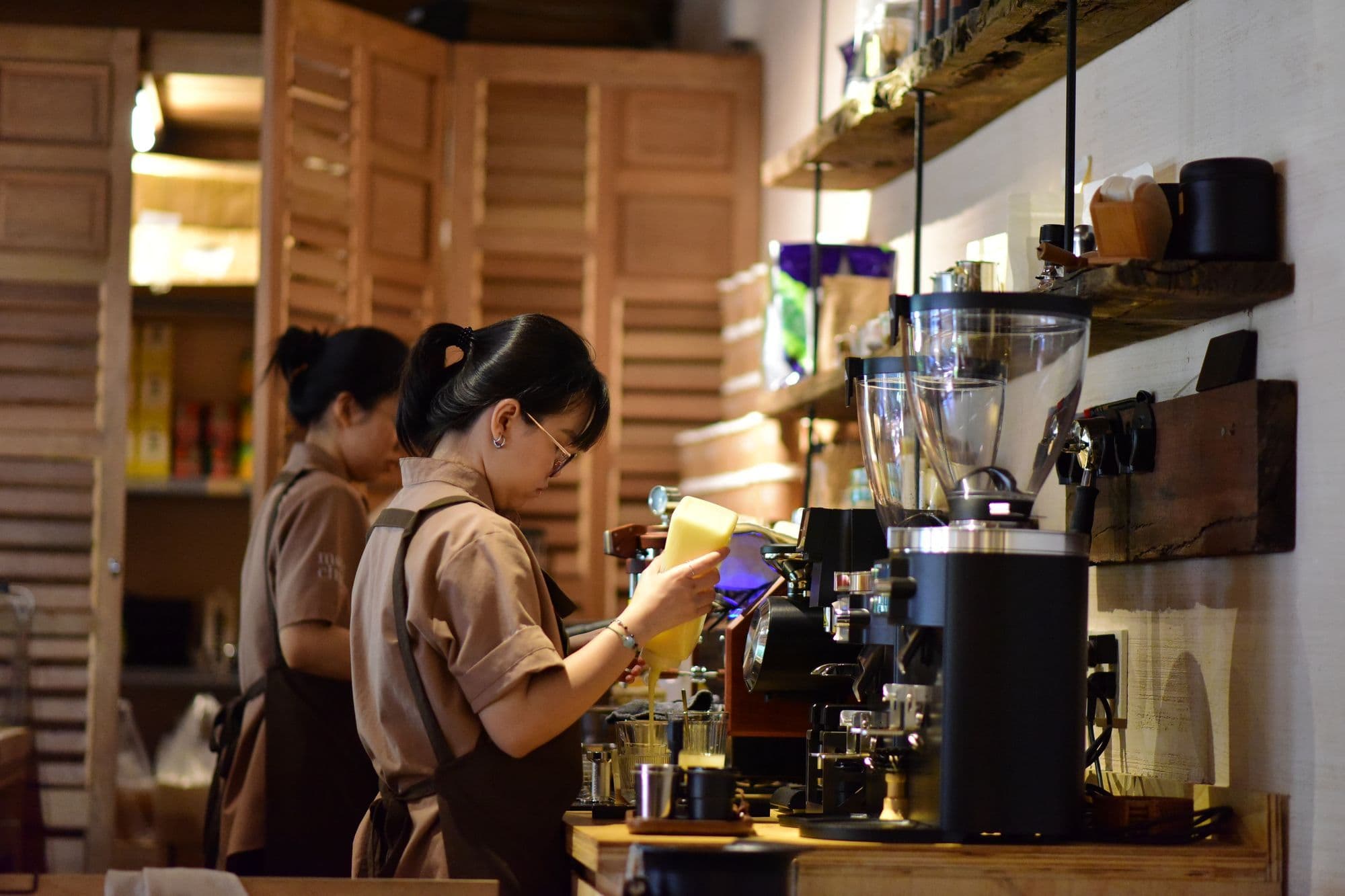
Most guides on how to start a cafe in Singapore treat the licence as the hard part, then go quiet on the day a real customer is supposed to walk through the door. That is the wrong place to stop. In 2024, more F&B businesses closed in Singapore than in any year since 2005, rents in some areas more than doubled, and margins are thinner than they look from the outside. Passing inspection is the easy bit. Filling tables, week after week, is the business.
This is the full journey, concept to first paying customer, with the Singapore-specific costs, licences and timelines you actually need, plus the part nearly every checklist skips: how a brand-new restaurant gets found and takes its first booking.
Start with the concept, not the kitchen
Before you price a single espresso machine, answer one question: who is this for?
It sounds obvious, but it quietly sets every cost that follows. A 35-seat specialty-coffee and brunch cafe serving the weekday office crowd within 500 metres is a completely different business from a destination brunch spot people travel across the island for. Same menu category, different everything else: your location, your rent band, your fit-out, your hours, and what "doing well" even looks like in month one.
Get specific about the occasion you serve. If your guests are office workers grabbing lunch, early success looks like the same faces coming back within two weeks. If you are a weekend destination, success looks like bookings and a growing customer list. Knowing which one you are tells you where to spend your launch energy, and stops you trying to speak to everyone and connecting with no one.
Concept discipline also keeps you solvent. A tight menu with two or three things you do brilliantly needs a smaller kitchen, less equipment, and less working capital than a sprawling all-day menu. Decide what you are before you sign anything.
What it actually costs to open (SGD, 2026)
Here is the number most guides dodge. Opening a small cafe in Singapore realistically runs S$100,000 to S$250,000. A full-service restaurant lands closer to S$150,000 to S$400,000. Coffee-shop concepts can start nearer S$80,000 if the space is small and the fit-out is light.
These are ranges, not promises. Your number depends on location, how much building work the unit needs, and how much kitchen you are putting in. Here is where the money tends to go for a small cafe:
| Cost item | Small cafe range (SGD) | Notes |
|---|---|---|
| Rental deposit | S$12,000 – 60,000 | Usually 3 months' rent up front |
| Renovation / fit-out | S$80,000 – 150,000 | Roughly S$80–120 per sq ft; more for a premium build |
| Kitchen + beverage equipment | S$15,000 – 60,000+ | A commercial espresso machine alone can be S$5,000–20,000 |
| Licensing + registration | S$5,000 – 10,000 | Including professional fees; bare statutory cost is about S$510 |
| Systems, branding, signage | S$10,000 – 20,000 | The tools that run the front of house |
| Working capital (3–6 months) | S$20,000 – 100,000 | Your runway before the business pays for itself |
Then there are the costs that ambush first-timers: a kitchen exhaust system and grease trap if you are cooking hot food (S$5,000–20,000), an electrical-load upgrade (S$1,000–5,000), a URA Change of Use application (around S$535), ongoing grease-trap servicing and pest control (a few hundred a month combined, and pest control is mandatory for your licence), and a music licence if you want Spotify playing (roughly S$300–500 a year).
Plan against the operator's reality, not the optimist's. Most cafes take two to three years to return the initial investment, and you want three to six months of cash runway so a slow opening quarter does not end the business before it starts. As a sanity check, a typical small heartland cafe, fit-out and equipment plus deposit, licences, systems, opening stock and a few months of payroll, lands around S$240,000–260,000 all in, which is why the honest range tops out where it does.
Find the right space, and the rent reality
Tie your location back to who you are serving. An office-lunch cafe needs to be where office workers already walk. A destination spot can afford to be a little harder to find if the concept is strong enough to pull people.
Rent is the figure that has moved the most, so use current numbers. Privately-held HDB shop units in the heartlands now rent at a median of around S$7.34 per sq ft per month, more than double a year earlier. Central and city-fringe prime space runs around S$24–26 per sq ft, and Orchard prime malls sit at S$31–36. In practical terms, a 1,000 sq ft heartland unit often lands between S$5,000 and S$9,000 a month, while a central shophouse can be S$10,000 and up. Whichever number you are quoted, check what kind of space it is before you compare, because heartland, suburban mall and prime-district figures are not the same animal.
One trap to avoid: before you sign, confirm the unit is approved for F&B use. If it is not, you need a Change of Use approval from URA or HDB, and that has to clear before you start heavy renovation, not after.
Licences and registration, the essentials
This is the part the internet over-complicates. You do not need a regulatory encyclopedia to open. You need to get a handful of things right and know where to apply for the rest.
Register the company first. Most F&B businesses incorporate as a Private Limited Company through ACRA's BizFile+ portal, which costs S$315 (S$300 registration plus a S$15 name application).
The core licence is the SFA Food Shop Licence: S$195 a year, valid for one year, applied for through the GoBusiness Licensing portal using your SingPass or CorpPass. The Singapore Food Agency reviews a complete application in about seven working days. The flow runs: submit your application with a scaled layout plan, tenancy agreement and supporting documents, receive In-Principle Approval, renovate to the approved layout, pass a pre-licensing inspection, pay the fee within 28 days, and you are licensed.
Your team needs training too. Every food handler must pass the WSQ Food Safety Course Level 1 (the qualification older guides call "Basic Food Hygiene"), and a restaurant must appoint a Food Hygiene Officer who holds Level 3.
The rest depends on your specifics, one line each: a URA or HDB Change of Use if the unit was not previously F&B, an SCDF Fire Safety Certificate after renovation, a Liquor Licence from the Police if you serve alcohol, Halal certification from MUIS only if you are serving the Muslim market, GST registration (the rate is now 9%), and a signboard approval if your outdoor signage is large. If you plan to hire foreign staff, note that F&B sits in the Services sector, where the foreign-worker quota is capped at 35% with an S Pass sub-cap of 10%, and the Local Qualifying Salary rises to S$1,800 a month from 1 July 2026.
That is the whole regulatory picture at a working level. For the fine print, GoBusiness and the SFA website are the sources of truth.
Build the kitchen, and the experience
Renovation almost always takes longer than the licence. The SFA's seven-working-day review is the quick part. Realistically, plan for ten to fourteen weeks from signed lease to soft opening once you factor in fit-out, equipment installation and inspection.
While the builders are in, do the work that makes word of mouth. Lock in two or three signature dishes before you open, the things you do at your absolute best. When every customer in the first fortnight is raving about the same laksa or the same wagyu rice bowl, the word of mouth becomes specific and repeatable: not "the new place was nice" but "you have to try the laksa." Get the whole team aligned so that when a guest asks what to order, the answer is the same, every time.
It also helps to design one shareable moment tied to a signature, something so distinctive people instinctively film it. Think of what Haidilao does with its hand-pulled noodles, performed tableside. Every video a customer shares is an advertisement you did not pay for, carrying the credibility of a real diner. Yours does not need to be that elaborate, but it should be repeatable and a genuine part of the experience, not a gimmick taped on top.
Go live: get found and take your first booking
Here is where most checklists end and most new restaurants quietly struggle. You can pass every inspection and still open to an empty room if nobody can find you and you have no way to reach the people who were curious.
Most new operators open with no contactable customer list at all. The pre-launch buzz, the renovation timelapses, the friends asking when you open, simply evaporates, because there was never a mechanism to capture it. Fixing that is the single best thing you can do before opening day.
Get found. Claim and fill out your Google Business Profile so you show up in Maps and search the moment people look. And give yourself a website that actually does something. This is where Oddle Site comes in: a restaurant website built to get found on Google and AI assistants, take the booking or order right on the page, and stay current without an agency on retainer. It is available in Singapore as an early-access release, so you can join the waitlist now ahead of the wider rollout in the second half of 2026.
Take the first booking. For any restaurant where dine-in is the experience, a reservation system should be live before opening day. It gives you predictability, you know how many people are coming, and it captures every guest's name, phone and party size automatically, so your customer list grows from the very first booking. Oddle Reserve gives you that direct booking channel, through your own branded page, your website, or straight from Google Search and Maps. A dine-in concept lives and dies on bookings; a takeaway cafe leans more on orders, which we will come to.
Capture who showed up. On every guest, try to learn two things: how they heard about you, and roughly where they are from. Those two answers tell you which launch efforts are working and whether you are building a base of locals or a reputation with destination diners. For the walk-ins who never booked or ordered online, Oddle Check-Ins captures the right details once, without annoying anyone, and turns an anonymous visitor into someone you can invite back.
A note on order of operations, because it matters. Reservations and capturing who showed up come first. Online ordering and delivery are a convenience layer you switch on once people already love the food, which is when Oddle Shop earns its place, handling delivery and takeaway under your own brand. Delivery marketplaces come last of all: they bring reach, but those are the platform's customers, not yours. Build your own channels first, so you always have somewhere to bring people back to.
After the buzz fades: make the first 90 days count
The opening rush will fade. Usually four to eight weeks in, the queue shortens, the bloggers move on, and the friends-and-family wave has done its duty. This is not failure. It is the natural arc of every launch, and the restaurants that last are simply the ones that used the busy weeks to build two things: a customer database and a clear signature identity.
The database is your relaunch button. When foot traffic dips but your contact list is at its biggest, you have a window to inject new energy: a seasonal menu, a new dish, a "we have been open two months, here is what is new" message to everyone who came once and enjoyed it. Without that list, you are just hoping people remember you.
And watch the right number. In the first 90 days, revenue is the obvious metric but not the most telling one, because novelty traffic flatters the top line. The number that predicts survival is first-to-second visit conversion: of the people who came in month one, how many came back in month two? If that is climbing, the food is landing and the system works. If it is flat, you know exactly where to look.
Frequently asked questions
How much does it cost to open a cafe in Singapore?
A small cafe realistically costs between S$100,000 and S$250,000 all in. The biggest line items are renovation and fit-out, kitchen equipment, your rental deposit, and three to six months of working capital. A full-service restaurant typically runs S$150,000 to S$400,000.
How long does it take to open a restaurant in Singapore?
Plan for about ten to fourteen weeks from signing the lease to a soft opening. The SFA reviews a complete Food Shop Licence application in roughly seven working days, but renovation, equipment installation and the pre-licensing inspection are what really set the pace.
What licences do I need to open a restaurant in Singapore?
At minimum, an ACRA company registration and an SFA Food Shop Licence, plus food-safety training for your staff. Depending on your setup, you may also need a Change of Use approval, an SCDF Fire Safety Certificate, a Liquor Licence, Halal certification, GST registration and a signboard approval.
How much is the SFA Food Shop Licence and how long is it valid?
The Food Shop Licence costs S$195 and is valid for one year. You apply through the GoBusiness Licensing portal with your SingPass or CorpPass, and you renew it annually.
Do I need to register a company before applying for a food licence?
Yes. You register your business with ACRA first, then apply for the SFA Food Shop Licence under that registered entity. Most F&B businesses set up as a Private Limited Company, which costs S$315 through BizFile+.
Is opening a cafe in Singapore profitable?
It can be, but the margins are tight and the market is crowded, so it rewards discipline. Most cafes take two to three years to recover the initial investment. The operators who make it work tend to control costs carefully, build a loyal base of repeat customers early, and keep their concept focused.
How much is rent for an F&B unit in Singapore?
It varies widely by location. Heartland HDB shop units run a median of around S$7.34 per sq ft per month, while central prime space sits at S$24–26 and Orchard prime can reach S$31–36. In monthly terms, a 1,000 sq ft heartland unit often costs S$5,000 to S$9,000.
The takeaway
Opening day is the start line, not the finish line. Passing inspection proves the kitchen is legal; it does nothing to fill the room. The operators who are still trading in year three are the ones who could reach the people who showed up in week one, and who built those customer relationships while the buzz was still paying for itself.
So before you sign the lease, decide two things, not one. Decide how you will pass inspection, of course, but also decide how you will get found and capture your first customers from day one. Sort that out early, and opening becomes the beginning of a business, not just the end of a renovation.
If you are planning a launch, Oddle Site is in early access in Singapore now, built to get your new restaurant found and taking bookings from the day you open. Join the waitlist to get set up ahead of the wider rollout.
Related guides
- How to Start a Restaurant: The Complete 2026 Checklist — the concept-to-first-customer playbook this Singapore guide builds on.
- How Much Does a Restaurant Website Really Cost? Agency vs DIY vs Built-In — what the "get found" part actually costs, and how to weigh agency against DIY against built-in.