How to Open a Cafe in Australia: Costs, Licences & Getting Found (2026)
Most cafe guides stop at the espresso machine. This one keeps going: the real AUD startup costs, the licences you can't skip, and the part nobody covers — how a new Australian cafe gets found on Google, takes takeaway orders without losing 30% to delivery apps, and keeps the customers who showed up.
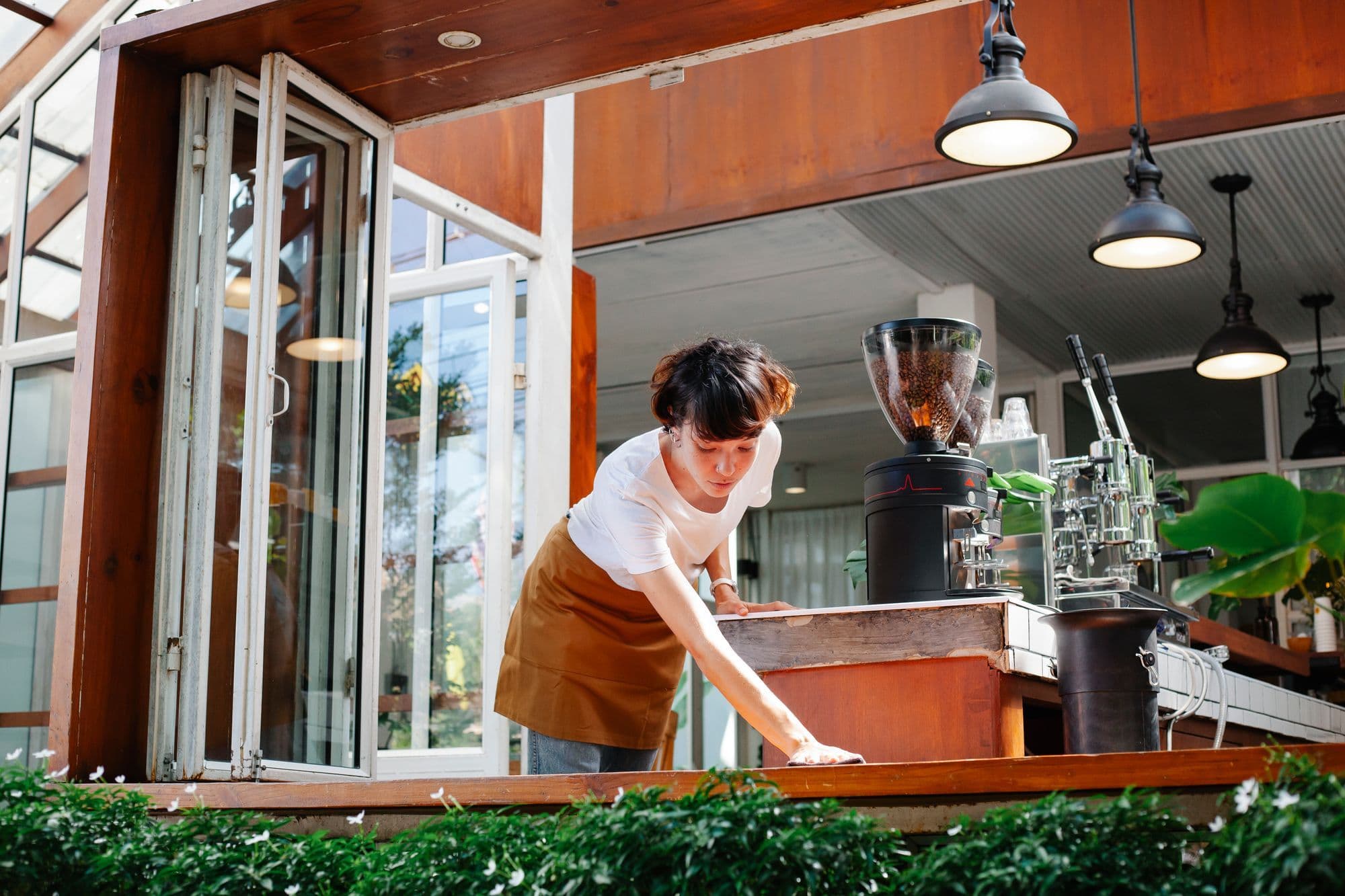
Opening a cafe is one of the most-Googled small-business dreams in Australia, and most guides hand you an equipment list, a rough budget, and a cheerful "good luck." The trouble is that the espresso machine was never the hard part. The hard part is whether anyone walks through the door in month three, after the opening buzz fades and the friends-and-family crowd has done their duty.
So this is a guide to how to open a cafe in Australia that covers the money straight, the licences at the right altitude, and then the part almost no one writes about: how a brand-new cafe actually gets found, takes orders from day one, and keeps the people who showed up. If you want the broader picture beyond cafes specifically, our complete checklist for starting a restaurant sits one level up from this. Here, we're getting specific about cafes, and about Australia.
Start with the numbers: what it actually costs to open a cafe
Let's get the money question out of the way, because it's the one keeping you up at night.
Opening a cafe in Australia typically runs anywhere from around $100,000 for a bare-bones setup to $500,000 or more for a full fit-out. A coffee cart or a tiny takeaway window can come in under $100,000. A small sit-down cafe done properly usually lands between $80,000 and $200,000. A larger venue with a full kitchen pushes well past $300,000.
The spread is enormous because so much depends on the space. A site that was already a cafe needs far less work than an empty retail shell you're converting from scratch. Here's a realistic breakdown of where the money goes:
| Cost item | Typical AUD range |
|---|---|
| Fit-out (small to mid) | $80,000–$170,000 ($1,000–$3,000/m²) |
| Equipment (total) | $30,000–$80,000 |
| Espresso machine (2-group) | $5,000–$20,000 new, $3,000–$10,000 refurbished |
| Coffee grinders (buy two) | $1,500–$4,000 each |
| Refrigeration | $1,500–$6,000 per unit |
| POS and ordering hardware | $1,000–$5,000 |
| Lease bond | 1–3 months' rent (often $20,000–$60,000 in metro areas) |
| Licences, permits, certificates | $400–$1,000 (up to $5,000 with a planning permit or liquor licence) |
| Insurance | $2,000–$5,000 per year |
| Initial stock | $5,000–$10,000 |
| Working capital buffer | $20,000–$80,000 |
There's one rule worth tattooing on the back of your hand: your real budget is your one-time startup costs plus three to six months of operating expenses. Cafes rarely break even on day one. The buffer is what keeps the lights on while you build a regular crowd, and the operators who skip it are the ones who close in their first winter.
A quick word on margins, because the dream can be misleading. Cafes are not high-margin businesses. ATO benchmarks put net profit at around 10% of sales, and industry data suggests many independent cafes run thinner than that, often in the 2–5% range. Plenty of owners do well, but the ones who do treat every cost line seriously and watch their numbers like a hawk. Go in with your eyes open.
Write a cafe business plan a lender will actually read
A cafe business plan isn't homework to file away. It's the document that forces you to answer the questions that decide whether this works, and it's what a bank or investor reads before they hand over a cent.
Start with the concept, then get specific about who it's for. "A cafe" is not a plan. "A weekday breakfast-and-lunch spot for the office crowd within 500 metres of the new business park" is a plan, because it tells you where to sign a lease, what hours to open, and what to put on the menu. The clearer your picture of the customer, the easier every later decision becomes.
Location follows from that. Foot traffic, visibility, and the kind of people walking past matter more than a slightly cheaper rent two streets over. Keep rent realistic against revenue: most healthy cafes keep occupancy costs to roughly 10–15% of sales. Read the lease carefully, especially the term, the bond, and who pays for what during the fit-out, and have it checked before you sign.
Then come the numbers from the section above, plus your break-even: how many coffees and plates a day you need to sell to cover costs. If you don't know that figure, you don't have a plan yet.
Licences, permits and food safety: the part you can't skip
Australian food regulation is administered by your local council, under your state or territory's Food Act, all harmonised under the national Food Standards Code. That means the exact process varies by where you are, so treat this as a map, not legal advice, and confirm the specifics with your council and a solicitor.
The core requirements look like this:
- Register or notify your local council as a food business before you start trading. In New South Wales you "notify," in Queensland you apply for a council licence, in other states the terminology differs, but every cafe has to do it.
- Appoint a Food Safety Supervisor. Most states require at least one certified person on staff, trained through a nationally recognised course. It's inexpensive (roughly $95–$120) and valid for five years.
- Train your food handlers. Since 8 December 2024, Food Standards Code Standard 3.2.2A requires food handler training and documented food-safety controls for higher-risk businesses, which includes cafes. This is recent enough that older guides miss it, so don't.
- Sort your business registration: an ABN, a registered business name, a business structure (sole trader, partnership, or company), and GST registration once your turnover crosses $75,000.
- Check whether you need a planning permit. Changing a shop from retail to food use often triggers a development application with your council, and approvals can take 8–12 weeks. Build that into your timeline.
- A liquor licence, if you'll serve alcohol. This is usually the slowest approval of the lot, often three to six months, and it comes with staff training requirements.
The cleanest way to get your exact list is the free Australian Business Licence and Information Service (ABLIS) tool on business.gov.au. Answer a few questions about your location and concept, and it returns the permits you actually need. Start this early, because the licences and the lease gate everything else.
Fit-out, equipment and your coffee setup
This is where a space becomes a working cafe, and where budgets tend to blow out, so keep a cool head.
A commercial kitchen has to meet the Food Standards Code and the Building Code: handwashing sinks, food-grade surfaces, proper ventilation and exhaust, a grease trap. Your fit-out designer and council will guide the detail. Expect fit-out to run $1,000–$3,000 per square metre for a basic build, more for anything premium.
The coffee setup is the heart of the operation. A good two-group espresso machine and a pair of grinders are non-negotiable, and this is one place not to cut corners, since the machine is literally making your core product hundreds of times a day. New machines run $5,000–$20,000, but quality refurbished units are a smart way to save if cash is tight. Many roasters will also finance or lease a machine in exchange for a supply agreement, which can take a big chunk out of your upfront bill, just read the supply terms before you commit.
Round it out with refrigeration, prep benches, a dishwasher, and your front-of-house gear. Then think about how guests will actually pay and order, which is a better lead-in to the part everyone skips than you might expect.
Getting found: how a new cafe actually gets discovered
Here's the chapter the equipment sellers and insurance blogs leave out, and it's the one that decides your first six months.
Most new cafe owners assume marketing means Instagram. So they post latte art, build a following of a few hundred people, and wait. The problem is that Instagram mostly reaches people who already follow you. It does almost nothing for the stranger two streets away who just typed "cafe near me" or "best coffee in [your suburb]" into their phone, or asked an AI assistant where to get a flat white this morning. Those people are ready to buy right now, and if you're invisible to them, you're leaving real money on the table every single day.
Two things make you findable. The first is a claimed and properly filled-out Google Business Profile: accurate hours, real photos, your menu, your location, and a steady stream of reviews. This is what puts you on the map, literally, when someone searches nearby. It's free, and it's the single highest-return hour you'll spend before opening.
The second is a real website. Not a Linktree, not just an Instagram bio, but an actual page that Google and AI assistants can read, showing your menu, where you are, your hours, and how to order. A surprising number of cafes never get this far, which is exactly why it's an advantage when you do.
This is the job Oddle Site is built for: a restaurant website designed to get you found on Google and by AI assistants, take the order or booking right on the page, and tell you who showed up, all running as one system instead of a stack of disconnected tools. Oddle Site is currently in early access ahead of a wider launch in the second half of 2026, so if this is the part you've been dreading, you can join the early-access waitlist rather than wrestling a generic website builder that knows nothing about restaurants.
Taking takeaway orders from day one (without losing 30% to delivery apps)
Cafes live on takeaway. Coffee out the door, lunch orders for the office, the regular who grabs the same toastie every morning. So the question of how you take orders isn't a someday problem, it's a day-one problem.
The obvious move is to list on the delivery marketplaces. With Menulog having exited Australia in late 2025, that now means Uber Eats and DoorDash. They'll bring you orders, no argument there. But the cost is steep: commissions run up to around 30% per order, and just as importantly, the platform owns the customer. You get the revenue, but you never learn who ordered, so you can't bring them back. As Oddle's own playbook puts it, a marketplace order gives you revenue, not a customer.
The alternative is first-party online ordering: takeaway and pickup orders through your own link, on your own site. You keep your margin, and you keep the customer relationship. This is what Oddle Shop does, a high-converting webstore for takeaway and delivery under your own brand, where every order quietly builds your customer database instead of someone else's.
The math is not subtle. A cafe doing $15,000 a month in takeaway through a marketplace at 30% is handing over $4,500 every month, the better part of a part-timer's wages, on top of giving away the customer data. First-party ordering typically costs a fraction of that. We've broken the full numbers down for the Australian market in our guide to your own website versus Uber Eats and DoorDash, and it's worth a read before you sign anything.
None of this means marketplaces are evil. Early on, they're a fine discovery channel, a way for new customers to stumble onto you. The mistake is making them your only channel, because then you're renting your customers from a platform that can change the rent whenever it likes.
Surviving after the opening buzz
Every cafe launch follows the same curve, and knowing it is half the battle.
Opening week is electric. Curiosity brings people in, friends and family fill the seats, maybe the local paper or a food blogger drops by, and a queue forms. Then the novelty fades. The bloggers move on, the friends have done their bit, and the queue shortens. This isn't failure. It's the natural arc of every launch. The question is what you built during the busy weeks to carry you through the quiet ones.
The answer is almost always a customer database. The cafes that last use those frantic early weeks to capture who showed up, an email or a phone number at the point of order, a quick loyalty sign-up at the counter, so they can reach those people again. Then, when a wet Tuesday is looking grim, they've got a reason to message: a new seasonal menu, a loyalty perk, a "we've been open two months, come see what's new."
This is the loop that ties everything together: take the order, capture the customer, bring them back. It's also why first-party ordering matters so much, because every order through your own webstore adds that guest to a database you own, ready for the day you need to fill the room.
Your first 90 days, in order
If all of this feels like a lot, here's the sequence to actually follow.
- Nail the concept and the customer. Know exactly who your cafe is for before you sign anything.
- Budget for the startup costs plus a real three-to-six-month buffer. The buffer is not optional.
- Lock in the lease and start the licences early. They gate everything else, and they're slow.
- Fit out the space and dial in your coffee. Get the core product genuinely good before you open the doors.
- Before opening, set yourself up to be found. Claim your Google Business Profile, get a real website live, and switch on first-party ordering so you can take takeaway orders from minute one.
- From day one, capture every customer. So that week five isn't a cliff.
If there's one thing to walk away with, it's this: opening day is the start line, not the finish line. The cafes that make it aren't the ones with the loudest launch. They're the ones that built the engine to get found and bring people back before the doors ever opened.
Ready to set up the get-found-and-take-orders side of your cafe properly? Take a look at Oddle Site for the website piece and Oddle Shop for takeaway ordering, or book a quick demo and we'll walk you through how it fits together.
Frequently asked questions
How much does it cost to open a cafe in Australia?
Most cafes cost between $100,000 and $500,000 or more to open, depending heavily on the space and the fit-out. A coffee cart or small takeaway window can come in under $100,000, a small sit-down cafe usually runs $80,000–$200,000, and a larger venue with a full kitchen can exceed $300,000. Remember to budget three to six months of operating costs on top of the startup figure.
Is opening a cafe profitable in Australia?
It can be, but margins are thin. ATO benchmarks put net profit at around 10% of sales, and many independent cafes run lower, in the 2–5% range. Owner take-home pay typically lands somewhere between $50,000 and $175,000 a year depending on the size and how hands-on you are. Profitability comes from tight cost control and a loyal repeat crowd, not from volume alone.
What licences do I need to open a cafe in Australia?
At a minimum, you'll need to register or notify your local council as a food business, appoint a Food Safety Supervisor, meet food handler training requirements, and sort your ABN, business name, and GST registration. You may also need a development application or planning permit for the space, and a liquor licence if you'll serve alcohol. The free ABLIS tool on business.gov.au gives you the exact list for your location.
Do I need a food safety supervisor for a cafe?
Yes, in most Australian states a cafe must have at least one certified Food Safety Supervisor on staff. Certification is done through a nationally recognised course, costs roughly $95–$120, and is valid for five years.
Can you open a cafe with no experience?
Yes, plenty of successful cafe owners started without hospitality backgrounds. You'll still need a Food Safety Supervisor and a solid grasp of the numbers, and hiring an experienced barista or manager early helps enormously. Go in expecting a steep learning curve in your first year.
Do I need a website for my cafe, or is Instagram enough?
Instagram alone isn't enough. It reaches people who already follow you, not the stranger searching "cafe near me" or asking an AI assistant for a recommendation. To get found by new customers, you need a claimed Google Business Profile and a real website that search engines and AI assistants can read, showing your menu, hours, location, and how to order.
How do I take online orders without paying delivery apps 30%?
Use first-party online ordering, your own ordering link on your own site, instead of relying solely on marketplaces like Uber Eats and DoorDash. Marketplaces charge up to 30% commission and keep your customer data, while first-party ordering typically costs a fraction of that and lets you keep the customer relationship. Marketplaces are fine as a discovery channel, just not as your only one.
How long does it take to open a cafe?
Three to six months is common, though it varies widely. The slowest steps are usually the lease negotiation, council planning approvals (8–12 weeks is typical for a change of use), and a liquor licence if you need one, which can add several months. Start the licensing and lease early, because they gate everything else.
Related guides
- How to Start a Restaurant: The Complete 2026 Checklist — the concept-to-first-customer guide this cafe playbook sits under, for any food business, not just cafes.
- Own Website vs Uber Eats & DoorDash: The Real Cost for Australian Restaurants — the full AUD math behind taking orders direct instead of paying marketplace commission.
- How Much Does a Restaurant Website Really Cost? — agency versus DIY versus built-in, with the ongoing costs most people forget to budget for.