How Restaurants Use AI: 9 Practical Ways in 2026
Nine practical ways restaurants use AI in 2026, ordered from front-of-house to back. Real tools named by region, real prompts to copy, and an honest read on which category is worth adopting first — and where five AI tools cost more than they earn.
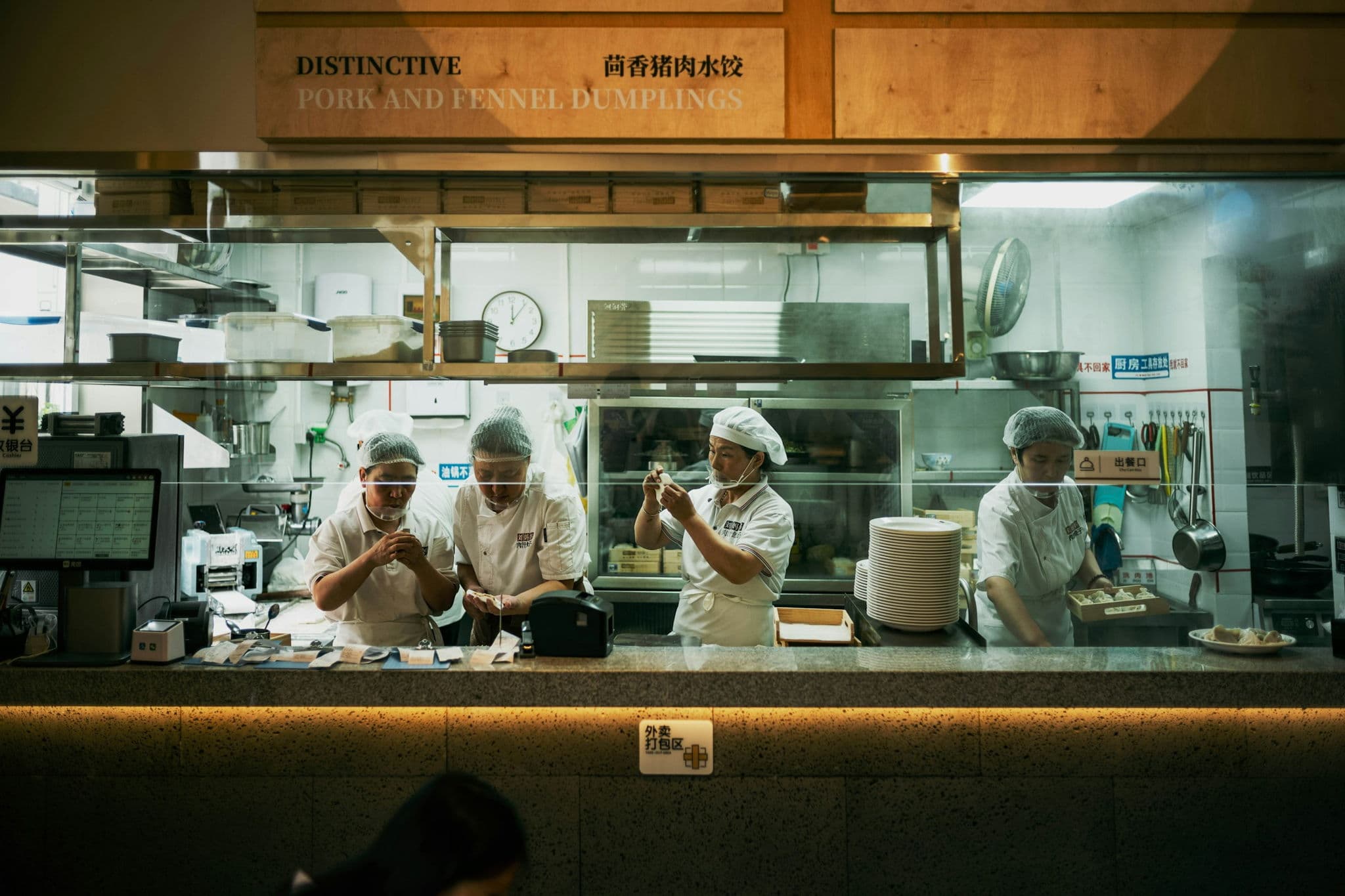
You've seen AI everywhere. The question is no longer whether to use it. It's where it actually moves the needle for a restaurant running service tonight.
Adoption is past the early-adopter stage. The NRA's State of the Restaurant Industry 2026 report puts roughly one in four US operators on AI tools somewhere in the business. SevenRooms' 2026 industry survey goes higher overseas — 87% in the UAE, 79% in the US, 74% in the UK, 65% in Australia. Whatever your market, your peers are trying things.
What follows is nine practical ways restaurants use AI right now, front-of-house to back-of-house. Marketing is the middle section we go deepest on — that's where the return on AI for an independent restaurant is largest. No "what is AI" primer. No McDonald's case studies stretched to fit a corner shop. Real tools named by region, prompts you can copy, and an honest read on where stacking AI vendors starts costing more than it earns.
1. AI for restaurants starts with reservations: Google AI and purpose-built booking systems
The first place most diners experience restaurant AI isn't on your site. It's on Google. A search like "seafood restaurant Sydney Friday 7pm" now surfaces AI-assembled answers that include bookable tables, pulled live from reservation partners integrated with Google. If your booking system isn't one of those partners and your Google Business Profile isn't in order, you're invisible in the answer.
The partners vary by market. In Australia, ResDiary and Now Book It dominate. In Singapore and Malaysia, Chope and Quandoo lead. inline.app has carved a slot across the region. In the UAE, Eat App and SevenRooms are common. Oddle Reserve connects to Google too, so bookings made via the AI answer flow straight into your floor plan.
The booking platforms themselves have layered AI into the back end. Predictive no-show scoring prompts a deposit request on high-risk bookings. AI table allocation stretches turn times without over-stacking service. Smart availability releases held tables as arrival probability drops.
Honest read for an independent operator: the biggest AI win in reservations is getting surfaced in Google's answer first. Platform-side AI — no-show probability, dynamic allocation — matters more once you're running 500+ covers a week.
Want the broader picture on how a connected booking system plays into guest experience? Here's the Oddle Reserve approach — all the essentials, nothing extra.
2. AI for menu design and ordering
Two different things get conflated here. There's AI that helps you design the menu — rewriting dish descriptions, generating photos when you don't have a shoot budget. And there's AI in the ordering flow itself, where guests place orders via voice, kiosk, or QR.
Start with menu copy — highest-return AI play for most independent restaurants, lowest effort. A prompt like "rewrite this dish description for a wine-pairing lunch menu, British English, 40 words max, no hype adjectives" gives you drafts a copywriter would charge hundreds for. Image tools generate hero shots when original photography doesn't exist or needs a seasonal refresh. Generic tools like ChatGPT and Midjourney will get you most of the way. 30 ChatGPT prompts restaurant owners can copy today covers the menu-copy side properly.
On the ordering side, QR-code ordering platforms have started adding AI-powered suggestions. me&u in Australia does this; Oddle Shop has similar mechanics. The upsell uses order history to surface "guests who ordered this also enjoyed" recommendations at the right moment. Two to five percent on average order value for most operators, which compounds on a busy weekend.
Drive-thru voice AI — Presto, US trials at McDonald's and Chick-fil-A — dominates the American press but hasn't meaningfully reached the Singapore, Malaysia, or Australian independent market. Ignore it unless you run QSR chains.
If QR ordering or takeaway is a meaningful part of your revenue, the upsell mechanics in Oddle Shop are worth seeing in action.
3. AI phone answering is where the fastest ROI lives for small restaurants
If keyword volume is any signal, this is the AI category restaurants are most actively shopping for. And for good reason.
The Popmenu team tells the story of Poppy's Pizza — 40+ abandoned calls a day when staff couldn't pick up mid-rush. Industry data puts the abandonment rate after one voicemail at around 83%. For a single restaurant doing 150 covers a night, that's easily five to ten lost bookings or takeaway orders a week. Across a month, you're paying rent on calls you never answered.
AI phone agents answer the phone in your restaurant's voice, take reservations, field common questions (hours, location, menu, directions, dietary), and route the rest to a human when it matters. The names worth shortlisting: Loman.ai, Slang.ai, Palona, Presto at the enterprise end, and SoundHound for voice-first setups. SevenRooms has cited Hostie delivering a 141% increase in over-the-phone covers; whether your numbers match that depends on how poorly the phone was being answered before.
How to evaluate one. Does it integrate with your reservation and ordering system, so bookings the AI takes show up on the floor plan? Does it sound natural in your accent and languages? Can you feed it your menu, hours, FAQ, and house style? What does it cost per call answered or per minute used?
Honest read: phone AI moves the needle fastest for phone-heavy operations — pizza, casual dining, takeaway-led. It matters less for reservation-first fine dining where guests already book via OpenTable, Chope, or Oddle Reserve. Match the tool to your actual call volume before you buy the subscription.
4. AI review response: Google reviews on autopilot (almost)
A single-outlet restaurant with a halfway-active Google Business Profile collects 5 to 20 reviews a month. Multi-outlet groups can hit 100+. Responding matters — Google's own signals favour businesses that reply, and prospective guests read the replies before they read the reviews. Most operators let it slip to 72-hour turnaround on half the reviews, which helps nobody.
AI review response tools read each review, draft a reply in your house voice, and flag the ones that need a human (specific complaints, legal-adjacent language, repeat issues you haven't fixed). You edit or approve in a click. Names to look at: SevenRooms AI Responses, Malou, Marqii, TastyReply, and Google's own "suggested reply" rolling out inside the Business Profile dashboard.
The quality wedge is context. A generic AI replying to a three-star post that says "food was great, waited 20 minutes for the bill" writes back "sorry for the wait, we'll do better." Fine. Forgettable. An AI fed your house context — that you use Oddle Terminal for tap-to-pay at the table, that weekend service runs differently from weekday, that your bill-drop policy changed in January — writes something specific and credible. The guest sees someone who actually works at the restaurant. The prospective diner reading next week sees the same.
Honest read: the win in AI review response is consistency and speed, not eloquence. A 24-hour response rate covering 90% of reviews beats a 72-hour rate covering 50% every time.
5. AI for restaurant marketing and email automation — where the ROI is largest
Per the NRA 2026 report, marketing is the #1 AI use case for restaurants at 46% adoption. Most of that usage is "we pasted a prompt into ChatGPT and got an email draft." It works. It's also the lowest-ceiling version of what AI can do for restaurant marketing.
The gap is context. Generic ChatGPT doesn't know your cuisine, your tone, your signature dishes, your regulars, or what you ran last month. Every email starts from a blank slate. You describe the restaurant. The audience. The tone. The promotion. Every time. The draft comes back fine and generic, and you spend 20 minutes fixing it before it sounds like your restaurant.
The Brand Knowledge Base: a briefing layer the AI reads every time
The fix is a persistent briefing layer the AI pulls from on every draft. Identity and philosophy, brand history, signature dishes, tone of voice, audience profile — loaded once, referenced every time. This is what Oddle ships as the Brand Knowledge Base, sitting inside Marketing.
If you're not on Oddle, build the equivalent yourself. Write a one-page doc covering cuisine, brand story, tone of voice, three signature dishes with descriptions, top three audience types, your last three campaigns and what they were for, and any language specifics (British English, Bahasa, Cantonese). Paste it into ChatGPT or Claude before every drafting session. The drafts that come back will be different. It's the single highest-return prompt move a restaurant can make.
[!info]
[SCREENSHOT NEEDED] Brand Knowledge Base settings screen — fields for brand history, signature dishes, and identity/philosophy populated with a sample restaurant profile.
Generate Campaign: brief-to-draft in one prompt
With the briefing layer in place, you open Marketing, click Generate Campaign, and describe what you want in plain language — "Mother's Day set menu promotion, send to regulars who haven't visited in 60 days, warm tone, British English, include the option to book or order takeaway." The AI drafts subject, preheader, and email body with your Brand Knowledge Base applied. Signature dishes referenced correctly. Tone matching your last three campaigns. Language in British English because that's how your brand is set.
[!info]
[SCREENSHOT NEEDED] Generate Campaign chat interface — prompt: "Write a Mother's Day set menu promotion email for lapsed regulars, warm tone, British English"; AI response: full email preview with Oddle-branded preview pane showing subject, preheader, and body.
You edit inside the email editor itself — "make this opening shorter", "change the CTA to booking instead of ordering" — using the in-editor AI assistant. No exporting to ChatGPT and pasting back. No losing your formatting every round.
AI image reimaging: one hero photo, a dozen uses
The other bottleneck in restaurant marketing is imagery. You've got one good photo of the dish. You need a hero for the email, a square crop for social, a lifestyle-style shot for the push notification. You don't have a designer.
AI image reimaging takes one source photo and generates on-brand variants — different framing, different lighting, different plating for seasonal occasions. Hari Raya plating for the Malaysian market. Chinese New Year for CNY. Upload once, generate what you need.
[!info]
[SCREENSHOT NEEDED] AI image reimaging before/after pair — user uploads a photo of nasi lemak; AI returns the same dish in festive Hari Raya plating with lantern-lit lighting.
The operator math
Email marketing ROI for active restaurant programmes sits at 25 to 40% open rates — this is Oddle's own data across active lists, not a vendor benchmark report. Marginal cost per send is near zero. The bottleneck was never reach or cost — it was the hour you spent drafting each campaign.
AI cuts that hour to ten minutes without cutting quality, as long as the AI has a briefing layer to work from. For an independent restaurant running two campaigns a week, that's four hours of your time back every week. Compare that to the 25 to 35% commission the aggregators charge on the delivery order, and you see why marketing AI is the category most restaurants should start with.
Here's a prompt readers not on Oddle can copy today. Paste your Brand Knowledge Base doc above it, then:
Write a Mother's Day win-back email for guests who haven't visited in the last 60 days. The goal is to drive bookings for our Mother's Day set menu. The tone should be warm and personal — not corporate. Open with a line that acknowledges it's been a while without being awkward. Reference one of our signature dishes naturally. Keep the body under 120 words. Include one clear CTA to book. Subject line under 50 characters, one preheader under 90 characters. British English.
Fill in the specifics, run it, edit. You'll get a draft in two minutes that would have taken an hour.
For the end-to-end view on email that actually works for restaurants, the complete restaurant email marketing guide goes deeper. And if this section has you curious, Oddle Marketing is where Generate Campaign, the Brand Knowledge Base, and AI image reimaging live in one place.
6. AI customer segmentation: picking who to email, not just what to write
The marquee above covers what you send. This covers who you send it to — the other half of the email equation and often more important than the copy itself.
Most restaurants send the same email to every guest on the list. A regular who came in last week and a guest who hasn't visited in 18 months get the same Mother's Day promo. The regular doesn't need it. The lapsed guest needs something different — a reason to come back, not a set menu pitch.
AI segmentation changes the unit of work. Instead of maintaining a spreadsheet of static lists, you describe the segment in plain language: "regulars who stopped visiting this quarter", or "guests who've ordered takeaway five or more times but never booked a table." The AI drafts the segment definition and you refine. The segment recalculates live as guests do things, rather than staying frozen from whenever you built the list.
This is what Customer Intelligence does inside Oddle — one guest profile unified across reservations, orders, check-ins, and payments, with segments that trigger Marketing and Enrolments in real time.
Honest read: AI segmentation only works as well as the data you feed it. If your guest data lives in five disconnected places — reservation system here, ordering platform there, email tool elsewhere, loyalty app separately — AI segmentation is mostly theatre. You're segmenting the 20% of the guest you can see, not the 80%. Which is the argument we come back to at the end.
More on how this works in practice: Customer Intelligence — the intelligence layer across your guest data.
7. AI for operations: forecasting, scheduling, inventory
Back-of-house AI is where restaurant press spends the most ink and independent restaurants adopt the least. Understand why before you pull the trigger.
Demand forecasting — AI models combining weather, local events, and historical sales data to predict covers by daypart. Enterprise chains like California Pizza Kitchen and Chipotle run this well. For a single outlet, the approach is available through restaurant-ops platforms; the win is real but smaller, because your service variation is smaller.
Staff scheduling — AI schedulers match predicted demand to shifts and compliance rules. Worth looking at: 7shifts, Harri, Nory. Real impact shows up at 20+ staff per outlet. Below that, most operators do fine with a spreadsheet.
Inventory — AI reorder points, waste tracking, par-level recommendations. MarketMan is the recognisable name. Dishoom has cited a 20% reduction in food waste after adopting AI-driven inventory monitoring. Worth checking the primary source for any claim in this category before you believe a vendor blog.
Honest read: this is the category with the widest gap between what enterprise chains do and what your restaurant needs to do tomorrow. Start with one domain — usually scheduling — prove ROI for a quarter, then expand. Don't try to AI-ify the back of house day one.
8. The 2026 AI stack for restaurants: a category map
There's no single "complete 2026 AI stack" you buy once. You pick the category where the ROI is clearest for your restaurant today, adopt one tool, measure, then stack from there. This table maps the space.
| Category | What it does | Named vendors | When to adopt |
|---|---|---|---|
| Reservations AI | Surfaces bookings in Google AI; no-show scoring; table allocation | Oddle Reserve, ResDiary, Now Book It, Chope, Quandoo, Eat App, inline.app | Day one if reservations are a growth lever |
| Ordering AI | Upsell suggestions in QR/kiosk/online flows | Oddle Shop, me&u | Day one for takeaway-led or QR ordering operations |
| Phone AI | Answers inbound calls, takes bookings and orders, routes to human | Loman.ai, Slang.ai, Palona, Presto, SoundHound | Day one for phone-heavy casual dining and takeaway |
| Review AI | Drafts replies to Google and delivery-platform reviews | SevenRooms AI, Malou, Marqii, TastyReply, Google suggested reply | Day one if review volume is above 5/month |
| Marketing AI | Drafts email and SMS campaigns; image variants | Oddle Marketing (Generate Campaign, Brand KB, image reimaging), ChatGPT with a brand-doc prompt | Day one for anyone sending email |
| Segmentation / CRM AI | Plain-language segment definitions, real-time recalculation | Oddle Customer Intelligence, SevenRooms CRM, HubSpot | Day one if your guest data is already unified |
| Scheduling AI | Matches staff to predicted demand and compliance rules | 7shifts, Harri, Nory | 20+ staff per outlet |
| Inventory AI | Reorder points, waste tracking, par recommendations | MarketMan, Nory, xtraCHEF | 500+ covers/week or multi-outlet |
| Menu AI | Dish copy, hero image generation, seasonal variants | ChatGPT, Claude, Midjourney, Oddle Marketing image reimaging | Day one — lowest-effort quick win |
The "when to adopt" column is the important one. Some rows are easy wins for any restaurant. Some only make sense above a volume or outlet-count threshold. Pick one row that matches your biggest bottleneck, and start there.
9. Why one unified dataset plus a Brand Knowledge Base beats five AI tools
Walk into any restaurant that's been stacking AI vendors for a year and you'll see the same symptoms.
The AI phone agent doesn't know which caller is a regular, so it asks a five-star guest for their details every time. The review responder doesn't know the reviewer had a poor table allocation caused by the booking system itself. The marketing AI drafts a takeaway promo for a guest who ordered takeaway yesterday. The segmentation tool sees the 20% of guests its source system knows about, not the other 80%. Every tool is clever on its own and collectively blind.
This happens because most AI tools sit on a single channel's data — one knows phone, one knows reviews, one knows email, one knows ordering. But your restaurant doesn't run on channels. It runs on guests moving across all of them. Without a unified guest record, AI output stays shallow.
What "unified" means in practice: reservations, orders, check-ins, and payments flow into one guest profile. A Brand Knowledge Base gives every AI touchpoint the same briefing — cuisine, tone, past campaigns, local context. The output that comes out the other side is specific to your restaurant, not generic-AI-wearing-your-logo.
Be honest about where this doesn't apply. Phone AI that answers your inbound line is a legitimate best-of-breed play whether or not it's connected to your CRM. Inventory AI sits on supplier and POS data that rarely needs to touch guest data. Rule of thumb: guest-touching AI benefits from unified data; operations AI often doesn't.
Oddle's play is the guest-touching side. Oddle Shop, Reserve, Terminal, Enrolments, Customer Intelligence, and Marketing all run on one guest profile. The Brand Knowledge Base sits inside Marketing. Generate Campaign, AI image reimaging, and the in-editor assistant all pull from both. Generic ChatGPT can't tell this story — no operational data. Single-category SaaS tools won't tell it — it would undermine their own positioning. It's the closing case for why, when your next AI tool is coming up, you favour unification over fragmentation.
Frequently asked questions
What AI tools do restaurants use?
Restaurants use AI across reservations (Google Reserve, Oddle Reserve, ResDiary, Chope), phone answering (Loman.ai, Slang.ai, Palona), review response (SevenRooms AI, Malou, Marqii), marketing and email (Oddle Generate Campaign, ChatGPT with a brand-doc prompt), customer segmentation (Oddle Customer Intelligence), staff scheduling (7shifts, Nory), and inventory (MarketMan). The useful starting point is picking one category with clear ROI for your restaurant, not adopting a whole stack at once.
How is AI used in the food industry?
AI in the food industry splits into customer-facing work — reservations, phone answering, review responses, marketing emails, menu descriptions, image generation — and operational work like demand forecasting, staff scheduling, and inventory reordering. Independent restaurants see the fastest ROI in marketing and phone AI; enterprise chains lead on operations AI.
How much does AI for restaurants cost?
Pricing varies by category. AI phone answering typically runs per call answered or per minute used. Marketing AI is usually bundled inside restaurant marketing platforms rather than priced standalone. A ChatGPT or Claude subscription costs under USD 30 per month per user. The better question than cost is return on investment — a USD 100 per month AI phone tool that recovers one lost booking per week pays back several times over.
Can AI replace restaurant staff?
AI replaces tasks, not staff. AI phone agents handle call volume during the rush; humans handle complex bookings and guest recovery. AI marketing drafts the email; humans pick the strategy and audience. Restaurants using AI well use it to free staff for higher-value work — hospitality, relationship-building, service recovery — not to cut headcount. The ones cutting headcount tend to regret it.
Is AI safe for small restaurants?
Yes, when adopted one category at a time and when guest data stays connected. The main risk isn't the AI itself — it's running five disconnected AI tools on top of five disconnected data sources, which produces inconsistent guest experiences and shallow output. Start with one category, confirm the ROI over 30 days, then expand. Favour tools that integrate with your existing guest record.
What's the best AI for restaurants?
There's no single best. For phone-heavy operations, AI phone answering (Loman.ai, Slang.ai) moves the needle fastest. For restaurants focused on repeat visits, AI-assisted marketing (Oddle Generate Campaign, or ChatGPT with a brand-knowledge-base prompt) has the largest return. For reservation-led venues, AI inside your booking system. Start with the category matching your biggest bottleneck today, not the loudest press.
How do I start using AI in my restaurant?
Pick the category where your biggest bottleneck sits today. If calls go unanswered during the rush, start with phone AI. If your email programme is dormant, start with marketing AI. If you're not appearing in Google's booking answers, start with your reservation system and Google Business Profile. Adopt one tool, measure impact over 30 days, then consider the next — favouring tools that connect to your existing guest data rather than creating another island.
Start with one category — here's where to begin
You don't need a complete AI stack. You need the one category where AI moves the needle most for your restaurant in the next 30 days.
Three steps. First, pick the category with the clearest return for where you sit today — phone-heavy operations start with phone AI, reservation-led venues start with reservation system AI, anyone sending email starts with marketing AI. Second, adopt one tool. Name the one you'll evaluate this month and put a date on the calendar. Third, when your next AI tool comes up, favour unification over fragmentation. A connected guest profile compounds. Five standalone tools don't.
The restaurants ahead on AI in 2027 won't be the ones running the most AI tools today. They'll be the ones whose AI is specific to their restaurant — fed by one guest record, pointed by one briefing layer, pulling towards one clear goal.
If you want to see how this unified approach ships in one platform, take a look at Oddle Marketing.