Best Restaurant Reservation Systems in Malaysia (2026)
Five reservation tools Malaysian operators actually use in 2026: Oddle Reserve, UMAI, TABLEAPP, Eatigo, TableCheck. Honest 'choose X if' splits, real MYR economics, and what to ask before signing.
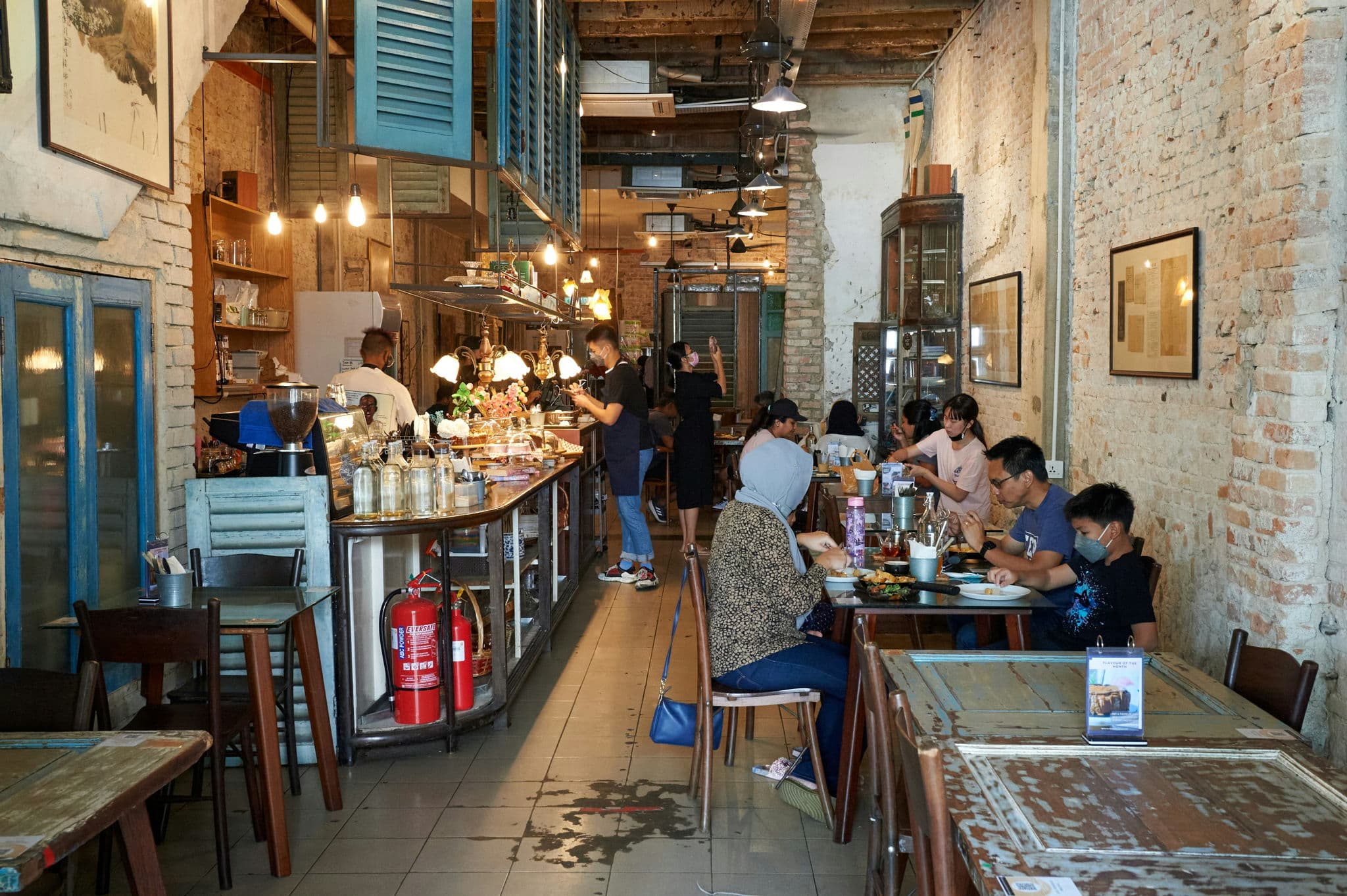
Why your reservation tool is actually a no-show tool
You held a six-top for 8pm on Friday. Three guests arrived. Earlier, you'd turned away a walk-in family of five because the floor said "we're full." That's the cost of a reservation system that only takes bookings, not one that protects them.
Most independent restaurants in Malaysia run no-show rates of roughly 10–20% on busy nights. At 80 covers booked, that's 8–16 empty seats held while real demand walked. A restaurant reservation system matters not for the booking step (a Google Form can do that), but for what happens around it: deposits and card guarantees that make guests show up, automated reminders that nudge them the day before, and a guest record that tells you who they are when they return.
This guide compares the five reservation tools Malaysian operators actually consider in 2026: Oddle Reserve, UMAI, TABLEAPP, Eatigo, and TableCheck. Honest "choose X if / choose Oddle if" splits for each, so you walk away knowing when not to pick us.
How to evaluate a reservation system for a Malaysian restaurant
Most buyer's guides bury you in fifteen criteria. You only need six.
1. The cost model. Reservation tools charge in three ways: a flat monthly subscription, a commission per attended cover, or a pay-per-confirmed-booking fee. Each wins at a different scale. Run the maths against your actual cover volume before you sign anything.
A worked example. A 60-cover restaurant doing 1,200 reservations a month, average spend RM80 per guest, on a 10% commission marketplace pays roughly RM9,600/month in commission alone. A flat subscription at RM800–1,500/month does the same volume at a fraction of the cost. The maths flips early, usually well before 500 reservations a month. Commission can still make sense for filling off-peak tables with discount-driven bookings. If your seats are mostly full at peak, it stops making sense fast.
2. No-show controls. Does the tool support deposits, prepayments, and card guarantees? A card guarantee (only charges if the guest no-shows) feels different to the guest than a full prepayment (paid upfront, refunded on cancellation). Both work. Neither works if the tool doesn't support them.
3. Booking channels. Where can a guest actually book? Your own website, your Google listing (Reserve with Google), your social pages, a marketplace app? A tool that locks you to one channel is a tool that owns the relationship.
4. Guest data ownership. When you stop using the tool, where does the guest history go? With you, or locked behind the vendor's app? Most operators don't ask until they're trying to switch and realise three years of guest data is gone.
5. Local payment integration. DuitNow QR for deposits, FPX for online banking transfers, local card terminals for card guarantee mechanics. Tools built for the US market don't always handle these well, and friction at the deposit step is friction at the conversion step.
6. What it connects to. Your POS, your online ordering, your loyalty programme, your email tool. A reservation tool that doesn't talk to anything else creates another silo, and you'll end up paying for a separate system to glue everything together.
Oddle Reserve is built around criteria 2, 4, and 6: deposit and prepayment tickets, guest data that flows into your own customer profile, and a reservation product that's part of a connected platform. The honest split is below.
The Malaysia 2026 reservation system shortlist
Five tools are in scope: Oddle Reserve, UMAI, TABLEAPP, Eatigo, and TableCheck. Naming what's not on the list matters as much as what is.
Chope was acquired by Grab in July 2024. The deal covered Singapore, Indonesia, and Thailand only. Chope's restaurant-side onboarding in Malaysia has thinned since, and in 2026 it's no longer a serious MY contender.
Quandoo is winding down its booking platform, with public communication pointing to a shutdown by end of 2026. Malaysia was never a primary Quandoo market. Don't onboard onto a platform being shut down.
OpenTable has no meaningful Malaysian operator footprint in 2026. The brand recognition from US travel guides isn't local availability.
SevenRooms is enterprise-tier guest CRM with real depth, used by some hotel groups and high-end multi-outlet operators in the region. Rare in MY independents because of pricing and implementation overhead.
That leaves the five we'll compare. All five are actively serving Malaysian restaurants in 2026.
The five at a glance
| Tool | Cost model | Approx. cost (MY, 2026) | No-show controls | Booking channels | Guest data ownership | Connects to ordering / loyalty / email | MY support |
|---|---|---|---|---|---|---|---|
| Oddle Reserve | Pay-per-confirmed-booking | No fixed monthly. Fee scales with volume. | Deposits, prepayments, card guarantees. Configurable cancellation windows. | Branded page, Reserve with Google, embeddable widget, Oddle Shop | You own it. Flows into Customer Intelligence. | Yes. Oddle Shop, Marketing, Enrolments, Terminal | MY ops team |
| UMAI | Subscription | Entry from USD 80+/month. Higher tiers on request. | Reminders, pre-order payments, waitlist | Branded page, Google, Facebook/Instagram | UMAI CRM | UMAI's own POS and marketing modules; no third-party ordering integration | MY-headquartered |
| TABLEAPP | Marketplace + restaurateur app | Request a quote (varies by tier and ELITE) | Basic table management; limited deposit tooling | TABLEAPP marketplace (mainly Klang Valley), restaurateur backend | Partially shared with the marketplace | No integrated ordering | MY-headquartered |
| Eatigo | Commission per attended diner | Rate set per partnership. Confirm with Eatigo. | None. Only charges on attended covers | Eatigo marketplace app | Lives with Eatigo | None | MY-active since 2017 |
| TableCheck | Subscription | On request | Deposits, prepayments, cancellation policies | Branded page, Google, regional marketplace | TableCheck CRM | Several POS integrations; no native ordering | Regional Asia-Pacific |
Pricing direction is current as of April 2026. Verify on each vendor's site before subscribing. Public list prices change.
Tool-by-tool: choose X if / choose Oddle if
Oddle Reserve
Reserve is the reservation product inside Oddle's connected platform. Branded booking page, Reserve with Google, an embeddable widget for your own site, and a Host App for the floor team.
Tickets are the no-show layer: deposits, prepayments, or card guarantees, with configurable cancellation windows per ticket type. Payouts on Paid Reservation Tickets run on a T+4 schedule. Cost is pay-per-confirmed-booking with no fixed monthly subscription, so it scales with bookings rather than being a sunk cost while you're starting out.
The differentiator is the connection. Every reservation captures guest data into Customer Intelligence, the same profile your ordering, loyalty, and email run on. Automations fire on real reservation events, not time-based schedules: cancelled-reservation recovery the same day, lapsed-reservation re-engagement at 60 days, no-show follow-ups when they happen. Reserve also connects to Oddle Shop, Enrolments, and Marketing. One guest record across all of them, which saves paying for a separate CRM, email tool, or check-in programme to stitch things together.
Choose Oddle Reserve if: you're a 1–3 outlet operator in Malaysia who wants reservations, ordering, loyalty, and email running off the same guest profile. You'd rather pay per confirmed booking than a fixed subscription. No-shows and lapsed regulars are the pains keeping you up.
Don't choose Oddle Reserve if: you only need a free booking page and don't care about guest data work. You're specifically hunting marketplace discount-driven traffic (Eatigo fits better). Or you need enterprise-tier guest profile features with deep PMS-level depth (TableCheck or SevenRooms is closer).
UMAI
UMAI is a Malaysia-headquartered restaurant tech company offering reservations, table management, online payment, POS integration, and CRM tooling. The booking widget is solid, Google integration is mature, the team is local. When something breaks, you're talking to someone in the same time zone. Subscription pricing starts from USD 80+/month for entry plans (as of April 2026; verify on UMAI's site), with higher tiers on request.
Choose UMAI if: you want a subscription-priced, all-in-one operator platform from a MY-headquartered vendor and don't already have a separate ordering, loyalty, or email stack to consolidate with. The MY headquarters is a real advantage if local support matters.
Choose Oddle Reserve if: pay-per-booking economics fit better than a fixed subscription, especially while you're scaling reservation volume. Or you want reservations inside the same platform as your ordering, loyalty, and marketing (one guest profile, one billing relationship). Operators have moved from subscription tools to pay-per-booking models, citing material monthly cost savings at typical 1–3 outlet scale.
TABLEAPP
TABLEAPP positions itself as Malaysia's first real-time booking app. Free for diners, instant confirmation, restaurateur backend for managing bookings. The ELITE membership programme (RM99 for three months for diners) is what pulls inbound diner volume to the platform, which is the structural reason TABLEAPP works for restaurants: marketplace traffic, strongest in the Klang Valley.
Choose TABLEAPP if: you want marketplace-style discovery from Klang Valley diners, and the consumer brand pull matches your guest profile. Or you want to participate in TABLEAPP ELITE-style promotional volume.
Choose Oddle Reserve if: you want bookings on your own branded surfaces (your website, your Google listing, your Oddle Shop checkout) rather than a marketplace where the diner discovers TABLEAPP first and your restaurant second. And you want guest data feeding your own CRM rather than partially shared with the marketplace.
Eatigo
Eatigo charges a commission per attended diner, set per partnership rather than published as a list price. Verify the rate before signing. The pitch is filling off-peak tables with discount-seeking diners. No subscription, no setup fees. Available in Malaysia since 2017.
The commission-only model has a clean side and a rough side. Clean: you only pay when guests show up. Rough: there's no real no-show tooling, because Eatigo only earns on attended covers, so the incentives don't push toward deposit-backed bookings. Guest data lives entirely with Eatigo.
Choose Eatigo if: you have predictable empty tables at off-peak windows (early weeknight dinners, late lunch) and discount-driven traffic actually moves your business. Many MY operators run Eatigo alongside a primary reservation tool to pull off-peak volume. That's a legitimate two-tool setup.
Choose Oddle Reserve if: your covers are mostly at peak, your guests aren't discount-driven, or your goal is repeat full-price bookings rather than one-off off-peak fills. At high cover volumes, Eatigo's commission economics work against you.
TableCheck
TableCheck is a regional Asia-Pacific reservation and CRM platform with stronger CRM depth than UMAI or TABLEAPP. Subscription-based, integrates with several POS systems, supports operators across Japan, Hong Kong, Singapore, and Malaysia. Targets fine dining, hotel restaurants, and multi-outlet groups. Pricing on request.
Choose TableCheck if: you're running a multi-outlet group with serious CRM depth needs and want a regional vendor with mid-market enterprise features. The depth on the CRM side is real.
Choose Oddle Reserve if: you want reservations, ordering, marketing, and loyalty in one platform rather than a CRM-leaning reservation tool stitched together with separate ordering and marketing tools. For most MY independents at 1–3 outlets, the connected-platform argument outweighs the deeper standalone CRM.
The hidden cost: paying for guest data you can't use
One thread runs through the comparison. Marketplaces (Eatigo, TABLEAPP) and most subscription reservation tools capture guest data into their system, not yours. When you stop using the tool, the relationship history goes with it.
This isn't unique to any one vendor. It's the F&B norm. Most loyalty programmes capture only the diner who signs up; the rest of the table walks out anonymous. Most reservation tools store guest contact in a vendor CRM that doesn't talk to your ordering tool, your email tool, or your in-store check-in. Saying otherwise sounds like a brochure.
The question to ask any reservation vendor: "If I stop using you in two years, what happens to my guest data?" The answer tells you more about the relationship than any feature list. More on why guest data matters as a long-term asset in your restaurant's most overlooked goldmine, and what a structured email follow-up plan looks like in our restaurant email marketing guide.
A note on PDPA Malaysia and guest consent
Quick awareness piece, not legal advice. Check with your own legal team for specifics.
Malaysia's Personal Data Protection Act 2010, with the 2024 amendments now in force, requires documented consent before you use guest data for marketing. Pre-ticked checkboxes don't count. Bundled consent (one tick covering booking, marketing, and analytics) doesn't count. Every marketing communication needs an opt-out, and penalties for non-compliance can run up to RM500,000.
When you evaluate a reservation tool, check that consent capture is built into the booking flow, that records are stored properly, and that consent is captured for you, not for the vendor's marketplace database. Marketplaces typically collect consent on their own behalf. Your own booking page should collect it on yours.
Oddle Reserve's booking flow and the Enrolments check-in flow both build consent capture into the guest journey. The guest opts in once, consent is recorded, and the automations that fire later have a documented basis. Refer to the Personal Data Protection Department of Malaysia (pdp.gov.my) for the official source.
Getting started: a one-page decision
Strip the comparison back to the question that matters: how does this tool make you money in two years, not next month?
For a 1–3 outlet independent who wants reservations, ordering, loyalty, and email on one guest profile, Oddle Reserve fits, and pay-per-confirmed-booking means no fixed cost while you're growing. For a subscription-based MY-headquartered all-in-one, UMAI is the credible alternative. For marketplace discovery, TABLEAPP and Eatigo work best alongside a primary tool, not as the primary. For multi-outlet groups with serious CRM depth requirements, TableCheck has the deepest standalone offering.
The thread underneath is the data question. The operators we work with who get this right think about reservations not as a booking step but as the start of a guest relationship across ordering, in-store visits, and email. They pick a stack that lets that relationship live in one place.
Want to see how Oddle Reserve fits your restaurant? Book a demo of Oddle Reserve →. Pay-per-confirmed-booking, no setup fee, MY ops team on the line when you need them. Or read more on how Reserve connects to Customer Intelligence and Oddle Shop.
FAQ
What's the best restaurant reservation system in Malaysia in 2026?
There's no single best. The right tool depends on your size, cost model preference, and whether you want reservations connected to your other guest-facing tools. For 1–3 outlet independents wanting a connected platform: Oddle Reserve. For a subscription-priced MY-headquartered all-in-one: UMAI. For marketplace discovery in the Klang Valley: TABLEAPP. For off-peak discount fills as a secondary channel: Eatigo. For multi-outlet groups needing deeper CRM: TableCheck.
Is OpenTable available for restaurants in Malaysia?
OpenTable has no meaningful Malaysia operator presence in 2026. Look at MY-active platforms instead. The brand recognition is residual from US travel content; the local availability isn't there.
Is Chope still active for restaurant reservations in Malaysia?
Chope was acquired by Grab in July 2024, with the deal covering Singapore, Indonesia, and Thailand operations. Chope's restaurant-side onboarding in Malaysia has thinned since. Operators evaluating new tools in MY in 2026 should treat Chope as a legacy option, not a primary contender.
How much does a restaurant reservation system cost in Malaysia?
It depends on the model. Pay-per-confirmed-booking (Oddle Reserve, no fixed cost) charges a per-booking fee that scales with volume. Subscriptions (UMAI from USD 80+/month for entry tiers; TableCheck on request) run as a flat monthly fee. Commission marketplaces (Eatigo, TABLEAPP ELITE) charge a percentage per attended diner with no setup fee. Run the maths on your actual cover volume. At higher reservation counts, commission marketplaces cost more than subscriptions or pay-per-booking quickly.
How do I prevent no-shows at my restaurant?
Use a reservation system that supports deposits, prepayments, or card guarantees with clear cancellation windows, and pair that with automated SMS or email reminders. Most no-shows are about forgetting, not bad intent. Oddle Reserve's three ticket types (deposit, prepayment, card guarantee) let you match the friction level to the booking. A Sunday brunch slot might use a card guarantee; a private dining room might require full prepayment.
Do I need a reservation system if I only get bookings via WhatsApp?
If you're getting more than around 50 reservations a month, yes. A structured system gives you no-show tooling, automated reminders, and a guest database that grows with each booking instead of disappearing into a messaging app. Below 50 reservations a month, WhatsApp can still work, but you're losing the data benefit on every booking.
What's the difference between a reservation system and a marketplace booking platform?
A reservation system (Oddle Reserve, UMAI, TableCheck) sits on your own surfaces (your website, your Google listing, your branded booking page) and the guest discovers your restaurant first, then books. A marketplace (Eatigo, TABLEAPP) is a third-party app where the diner discovers the marketplace first, then books, with the data partially owned by the marketplace. Many operators use both: a reservation system as primary, plus a marketplace alongside to fill off-peak windows.